


The role of the forklift is to lift and transport loads of various capacities, while keeping its grip on the object.
Forks, masts and axles help it in each of these phases, making it practical and easy to use.
The trolley gets its power from the motor, which can be electric, diesel or gas. The engine transmits power to the individual forklift components, which work symbiotically to take care of the load and its transport.
There are different types of forklifts, differing in their use and technical specifications.
Among all of them, the counterbalanced forklift is probably a favorite among businesses; safe and functional just as you would expect from an exceptional forklift, which knows how to handle any irregularity and carry heavy weights.
Today, we will try to explain the operation mechanism of the counterbalanced forklift as best we can, focusing on the role of the rear and front axle.
Let’s get started!
The question comes naturally, why is this special forklift called a counterbalanced truck?
The name’ s choice is related to the presence of a large iron counterbalance placed in the back of the machine (the rear axle).
The weight, located in front of the support point, manages to balance the forklift and make it as stable and safe as possible.
In a sense, the counterbalanced forklift is comparable to an automobile, with more than similar balancing characteristics. Just like a car, it can handle irregularities in the terrain and “cushion” them, avoiding jolts or crashes that can damage goods.
Speaking of the technical structure of the counterbalanced forklift, it is important to describe in more detail two basic elements:
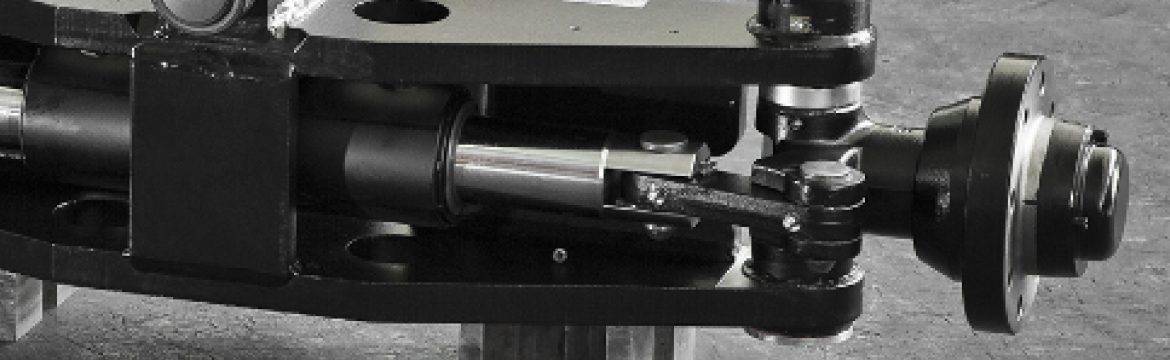
Therear axle and front axle work together to provide balance and speed to the entire counterbalanced truck. We are talking about two different forces, but they are promoting and pushing for the same end result.
Their presence increases the overall safety level of the tool, helping individual drivers and all those who purchase forklifts for load shifting.
In so many cases, especially when there is a need to transport heavy and “delicate” loads (which absolutely cannot tip over), the use of a counterbalanced forklift is more than recommended.
That’s because it prevents the load from falling apart, absorbing unevenness in the ground and providing maximum grip.
The rear axle, in particular, is the engine around which the whole trolley revolves. Its presence is indispensable, an element that is really impossible to give up.
Compared with traditional models, the counterbalanced version is safer and more practical, also suitable for those who have to work in confined spaces and on rough terrain. The surroundings are unimportant precisely because they can be transformed by the cart and its balancing abilities.
If you are looking for an optimal solution for your cargo transport, this may prove to be the best alternative available to you. Good luck!